

Flux, Stoneware, underglaze, overglaze, 15 x 12 x 13”
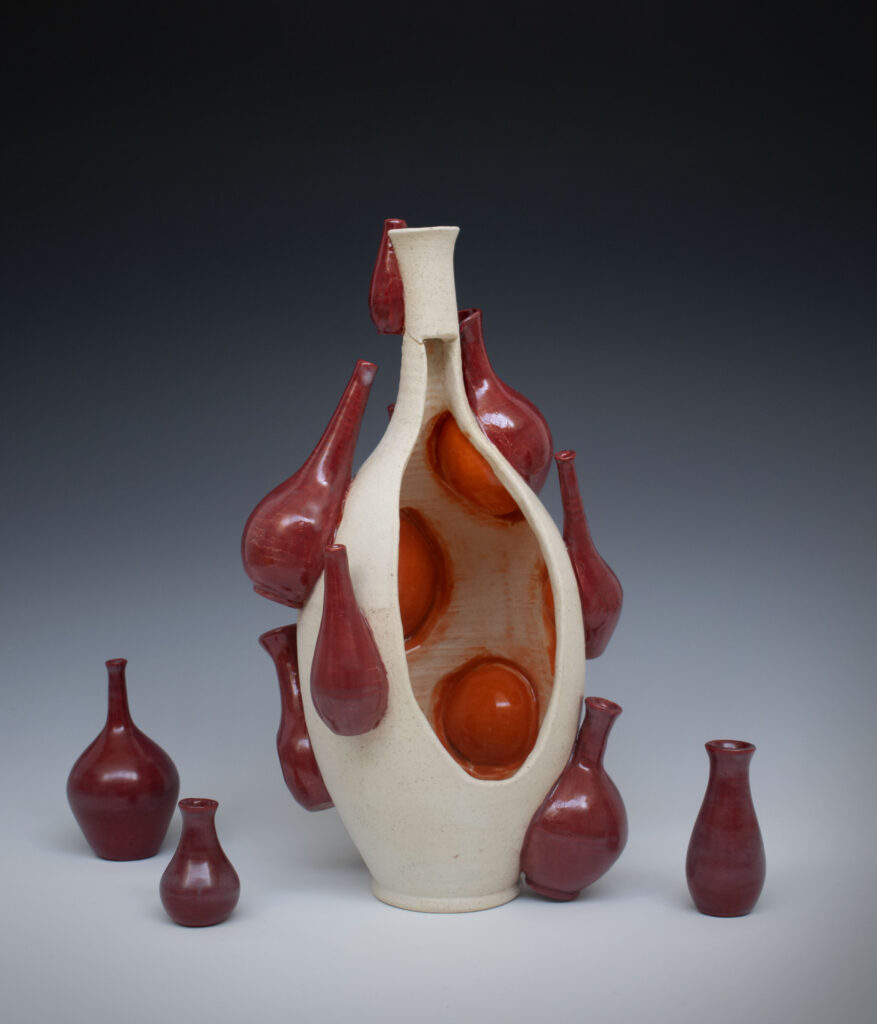
Never Alone, Stoneware, underglaze, overglaze, 13 x 8”
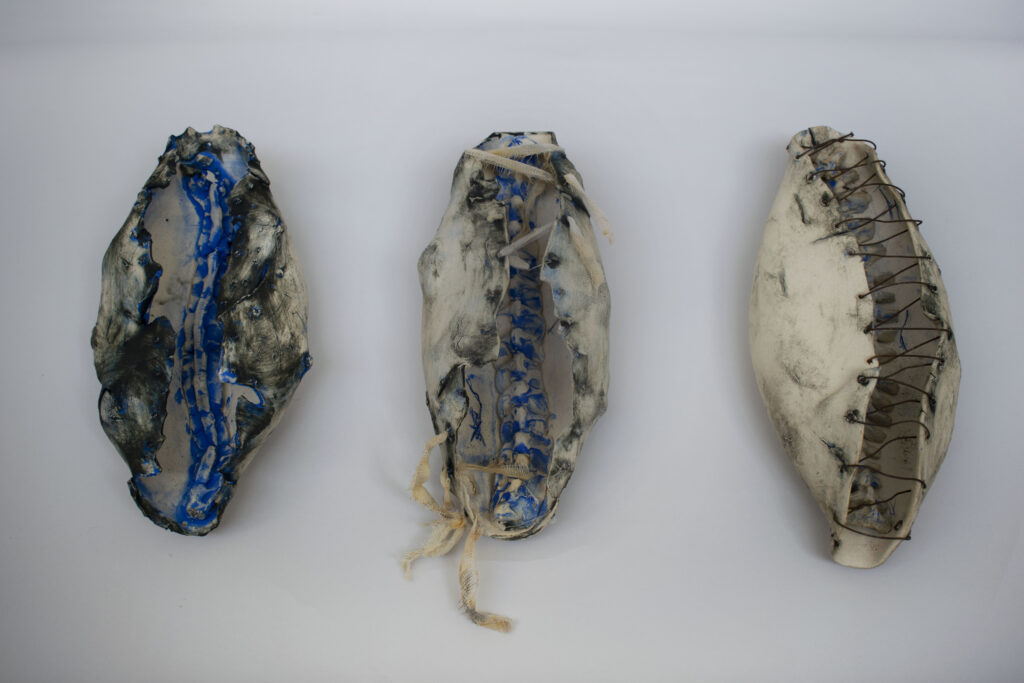
Time to Heal, Stoneware, underglaze, mason stain, stretch cord, gauze, steel wire, 14 x 6 x 5” each
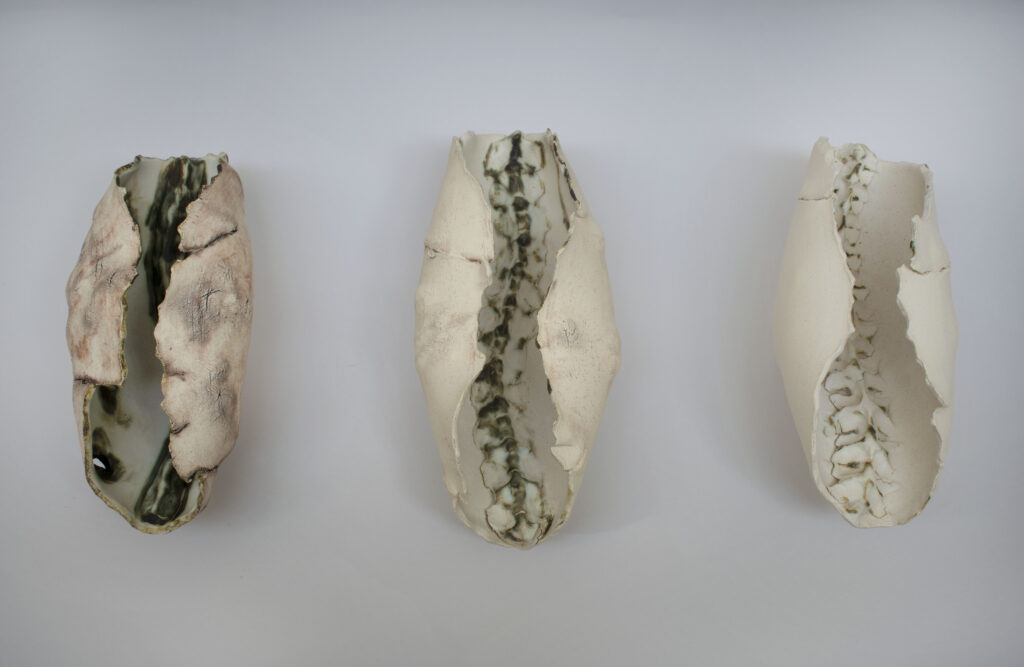
Grow, Stoneware, underglaze, mason stain, 14 x 6 x 5” each
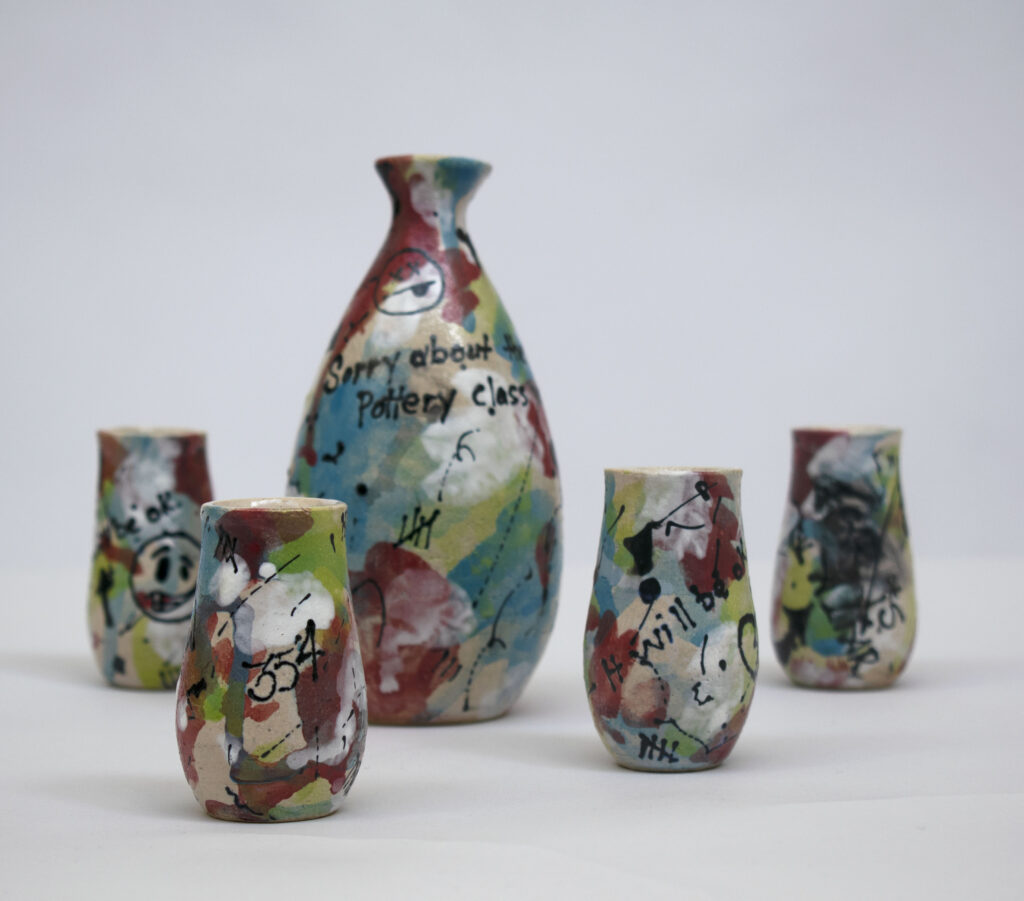
Sorry About the Graffiti, Sake Set, Buff Stoneware with underglaze and clear overglaze, Bottle: 9 x 4 x 2, Glasses: 3 x 1.5 x 1
Artist Statement
My work reveals the long term, and often permanent damage domestic abuse can cause referenced here in my body of work. The first, ‘Time to Heal’, is a series of three spines showing the transition of a person who is going through the healing process from domestic abuse. The altering of semi-enclosed forms by tearing, marring, and perforating represents wounds and scars left by the abuser. The degree of “scarring” and bruising lessens as the series progresses. The spine itself also moves through a metamorphosis as the details of the vertebrae become more defined, signifying regained strength and rebuilding one’s backbone.
The second piece, ‘Never Alone,’ is made up of wheel thrown bottles with the largest representing the abused and the smaller bottles representing the support system. The smaller red bottles convey the strength that a support system brings with it while the orange protrusions signify encouragement. The subtracted bottle silhouette represents the hole that an abuser often leaves. The choice to leave the larger bottle white shows loss of identity that often happens in an abusive relationship.
Pushing more towards the conceptual, ‘Flux’ explores form over function by referencing the same support system. The shiny, stippled interior represents healing and recovery while the dull, rough texture of the exterior refers to the vulnerability of the abused. However, by removing the familiar identity of the bottle, the viewer is left to their own interpretation. This freedom asks the viewer to examine the piece more closely and from different angles.